Thursday, January 24, 2013

Printing's key role in the 157th U.S. Presidential Inauguration


Earlier this week, when I was having a bad day, one of my more generous LinkedIn connections, Mr. Kevin Keane, an attorney and President and CEO of IAPHC in Minneapolis-St. Paul, threw me a lifeline in the form of a YouTube video link.  It illustrates the care and pride with which Ms. Davita Vance-Cooks, Acting Public Printer, and other staff of the U.S. Government Printing Office (GPO) developed and produced essential printed collateral for Monday’s 57th Presidential Inauguration of Barack Obama. 

The GPO’s contributions to this momentous occasion include invitations, stationery, program packet kits, parking passes, maps, signage, 280,000 colour-coded tickets to the inauguration ceremony, and over 10,000 secure-access credentials.

What especially thrills me about the video is the reminder it provides of the ages-old connection between printing and democracy.  Its commentaries include Charles E. Schumer, Chairman of the Joint Congressional Committee on Inaugural Ceremonies, pointing out that Monday’s swearing-in ceremony was not only the inauguration of the American president but also a celebration of democracy, free elections, and the peaceful transfer of political power.

I am writing this post within view of a free-giveaway poster I once collected at a printing trade show and liked so much (despite its archaic wording that forgets to include women) that I had it laminated and hung it on my office wall.  It reads:

The PRINTER

Without him, tyrants and humbugs in all countries would have their own way.  He is a friend of intelligence and thought, a friend of liberty, of freedom, of law, indeed, the friend of every man who is a friend of order.

Of all inventions, of all discoveries in science and art, of all the great results in the wonderful progress of mechanical energy and skill, the PRINTER is the only product of civilization necessary to the existence of free men.

- Charles Dickens, 1850

Thank you, Kevin Keane and Charles Dickens, for reminding me that printing matters in the same way that politics and law and journalism matter.  I recognize these truths as well as anyone, because my father’s cousin, Hugh Gaitskell, was Britain’s Leader of the Opposition from 1955 to 1963, and because every journalist worth her salt knows that "The primary purpose of journalism is to provide citizens with the information they need to be free and self-governing" (Bill Kovach and Tom Rosenstiel, The Elements of Journalism).  But sometimes, when I lose sight of what matters in the mire of everyday living, I’m grateful that there are positive influencers like you to help lift our baser thoughts up into the higher sphere where the best of human achievements are possible.

PS:  I should also mention it was Mr. Keane who recently drew my attention to the delicious irony that, after Google caused a huge kafuffle earlier this month by trying to instigate a Paperless 2013 campaign, Google Creative Labs turned around and won USA Today’s first $1-million print advertising contest.

http://books.google.ca/books?id=oLzYD18Z-OcC&printsec=frontcover&dq=inauthor:%22Tom+Rosenstiel%22&hl=en&sa=X&ei=i34BUYX3E9OpqQHh4IH4Bw&ved=0CD4Q6AEwAQ#v=onepage&q&f=false
http://www.myprintresource.com/article/10856429/printing-industry-fights-back-after-google-attack-ad

Monday, January 21, 2013

Sudden closure of Canada’s only Vertis plant leaves 100 workers seeking compensation, 3 U.S. closures to follow


Suddenly last week, the only Canadian plant owned by Vertis Holdings Inc. was shut down in Fort Erie, Ontario, leaving about 100 staff without jobs or the advance notice, termination, and severance required under Canadian law.  The closure occurred simultaneously with last week’s completion of the acquisition of most of Vertis’s assets by Quad/Graphics (both American companies), a process that began last October in which Vertis is reported to have filed for Chapter 11 bankruptcy protection to facilitate the sale (after a similar filing only two years previously).  The Fort Erie plant is among at least four Vertis facilities that were not included in the purchase.

Jim Thibert, general manager of the Fort Erie Economic Development and Tourism Corporation, tells the Fort Erie Times that Quad Graphics took over operations at the now defunct plant last year but does not find it feasible to keep the Canadian location open.  "They don't want a plant in Fort Erie because they have nothing to do with Canada," he says.

In a media release, Dan Wickson, president of Communications, Energy and Paperworks Union of Canada (CEP)  Local 425-G, which represents the Vertis employees, says many of them have worked for the company for most of their lives.  The release says CEP is currently in discussions with legal counsel, the Town of Fort Erie and its development agency, and the local Member of Provincial Parliament while the union decides on its next move.  Since Vertis is based in the U.S.A., Wickson predicts in the Fort Erie Times that employees will likely have to file a claim for their severance and termination pay in a U.S. bankruptcy court.

Quad/Graphics director of corporate communications Claire Ho tells PrintCan that U.S. facilities also left out of the Quad/Graphics transaction that are slated to close in the next 60 to 90 days are located in Dallas, Texas; Medina, Ohio; and North Brunswick, New Jersey.
Any thoughts or further predictions regarding fiscal, legal, and moral responsibility and outcomes in this matter?


More financial data at:

Thursday, January 17, 2013

More about the inner workings of university in-plants


I want to be the first to point out an error in the third paragraph of the printed version of my January column for PrintAction, "Inside University In-plants": https://www.box.com/s/ems8x9hnrrvjnmob0kag


In the text, where Chris Panagopoulos, Manager, Publishing and Printing Operations at York University, describes conditions when he began working at York in 2008, he says:  "Back then we were printing between 30- to 40-million course kits annually".  However, the text should have read:  "30- to 40-million impressions annually".

Additionally, referring to the article’s sixth paragraph, Mr. Panagopoulos informs me that although 75 percent of his customers chose to submit hard copies of exams for printing in high-security delivery bags, they also have the option of submitting exams via a secure FTP site or password-protected e-mail.

(You'll notice that the text has been corrected accordingly at the above digital link.)  

Another point of interest is that, in quantifying his Publishing Department’s mammoth responsibility for copyrights, Mr. Panagopoulos tells me that each of the up-to-2,000 copy-right protected items they handle may consist of as many as 30 different articles, periodicals, or business cases—each requiring permission and payment for reproduction rights.

Finally, because I especially regret that with the printed article we didn't have enough space to include portraits of Heather Hersemeyer, President of CUPMAC (College and University Print Management Association of Canada, left) and Peter Klit, Secretary/Treasurer of CUPMAC (right), both of whom were so generous in providing information about both their association and their own in-plant operations, I have included their photos in this post.

In case you’re wondering, the editors of PrintAction decided to bring you another article about the esoteric world of in-plant printers based on the large amount of interest we tracked on LinkedIn and other social media platforms to our June-2012 profile of a hospital in-plant:  “Running a Healthy In-plant”  https://www.box.com/s/8zck29hd7by8drozefid

We trust that  these and other articles are meeting your need for information on the latest industry and economic news and emerging technology and trends.

But if not, just let us know.

Wednesday, January 9, 2013

Ryerson's GCM program to host international conference, Prof Art Seto wins Dean’s Award


Two news items from Ryerson University's Graphic Communications Management (GCM) program in Toronto (Canada's only 4-year degree-level program dedicated to graphic arts studies):


Firstly, from June 2-6, 2013, GCM will host the 45th Conference of the International Circle of Educational Institutes for Graphic Arts, Technology and Management (IC) for the first time in North America.

IC is an informal network with about 100 members, founded in 1957 in Lausanne, Switzerland by a group of European universities.  Dr. Wolfgang Faigle, Prorector of the Stuttgart Media University (HdM), has been its president since 2006. 

IC’s 2013 conference will explore scientific and educational topics from the fields of Graphic Arts Technology, Management, and Communication in a broader sense.  Conference organizers have issued a call for papers, inviting people from the printing and allied industries, anyone whose job involves research, former GCM students, students pursuing a graduate degree, or those who have completed a graduate degree to submit an abstract of research findings for presentation at the conference.  Submission deadlines are listed below:


1st Call for Papers:  Authors of abstracts submitted by February 1, 2013 will be notified of the results of peer review by February 25, 2013.

2nd Call for Papers:  Abstracts will continue to be accepted until the final deadline of April 1, 2013. Authors of papers submitted between February 1 and April 1, 2013 will be advised of the results of the selection by April 22, 2013.

Further guidelines for abstracts, conference details, and registration are now available on line:

Secondly, it give me extreme pleasure to brag that Art Seto of GCM (left) is the 2012 recipient of the Dean’s Award--the first time a GCM faculty member has been awarded this honour.  Professor Seto’s notable achievements include transforming a dreaded estimating course and two semesters of bindery into some of the program’s most popular course offerings.  

Sincere congratulations on this well deserved recognition for teaching excellence, Art.

Tuesday, January 8, 2013

New U.S. trade association for small printing company owners


A group of 19 American owners of small-to-medium-sized print shops has founded the National Print Owners Association, Inc. (NPOA), a new trade association providing services and products specifically geared to what for years was called the Quick-Printing segment of the industry. Serving as the new association’s Acting Executive Director is John C. Stewart of Melbourne, Florida. 
Mr. Stewart is president of QP Consulting, Inc. and for years has published statistical studies in the printing and mailing industries (until recently including studies for the National Association of Quick Printers [NAQP]).  In recent months, on his blog and Website, Mr. Stewart has reported the absence of a trade association to serve the needs and interests of small commercial printers effectively, as well as concerns over the plummeting membership numbers, high dues and overhead, and top-down leadership of existing organizations.
Incorporated on December 3, NPOA was first launched on December 21 on the popular list server at PrintOwners.org, owned by Mike Stevens of WebSitesForPrinters.com, then via a 30,000-address e-mail campaign on January 2.

In an effort to keep fees low enough that even the smallest printers can afford to join, NPOA is charging $275 for annual dues after January 31, or $225 as an introductory offer for printers who join by the end of this month.  They have already launched their own discussion group on LinkedIn and have scheduled their first Owner’s Conference to be held in New Orleans, Louisiana, from April 19-21, 2013.

Are you interested in joining NPOA?  Do you have any predictions on how the new association will fare?

Update on 25 February 2012:

This morning, while completing an article on the start-up of NPOA for the March issue of PrintAction, I was impressed to discover on the new association's Website that their April conference has sold out at 110 registrations and their membership count now stands at 254--pretty fast work for an organization that only became legally incorporated less than three months ago.

Growing opportunities in toner and inkjet packaging


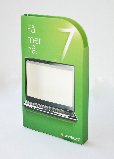
About a year ago, I interviewed Simon Healy (right), chairman of Mediaware Digital (Dublin, Ireland), about his company’s early adoption of Xerox’s toner-based Gallop production line to produce short-run folding cartons in multiple languages for Microsoft software (below left). 

In my resulting article, he explains how toner packaging provides multiple solutions for the manufacturer’s needs, including small orders for new global niche markets and introducing new brands, inventory micromanagement, and agile on-demand Web-to-print applications.
https://www.box.com/shared/gvt86mmjmo

Now Mr. Healy is scheduled to be a featured speaker at a February 28th workshop in Mississauga, Ontario, sponsored by Xerox for PAC - The Packaging Association:        

The event provides another opportunity among many to investigate the growing multitude of technologies and opportunities in inkjet and toner packaging—which also include:
http://www.myprintresource.com/article/10829310/large-format-graphics-a-package-deal


http://www.printaction.com/Vendor-Wire/20120228-drupa-fujifilm.html